Transylvania. The name alone conjures images of mist-covered castles, dark forests, and the legend of Dracula. The reality is even more impressive — and considerably less spooky. Transylvania is one of Europe's most beautiful, historically rich, and undervisited regions.
Where Is Transylvania?
Transylvania is a historical region in the heart of Romania, roughly corresponding to the central part of the country. It is surrounded by the Carpathian Mountains, which separate it from Wallachia to the south and Moldova to the east. Major cities include Cluj-Napoca (the unofficial capital), Brașov, Sibiu, Sighișoara, and Târgu Mureș.
Getting to Transylvania
By air: Cluj-Napoca International Airport (CLJ) is the main gateway, with direct flights from London, Amsterdam, Paris, Rome, Vienna, Frankfurt, and other European cities. By train: international train network connects Romania to Vienna, Budapest, and other capitals. By road: accessible from Hungary via the A3 motorway and from Bucharest via the DN1.
Top Attractions in Transylvania
Bran Castle — the most famous castle in Romania, associated with Dracula. 3-4 hours from Cluj. Peles Castle — considered one of Europe's most beautiful, located in Sinaia. Sighișoara — only inhabited medieval citadel in Europe, UNESCO site, 2 hours from Cluj. Sibiu — Romania's most beautiful city, 2 hours from Cluj. Salina Turda — underground salt mine, 30 minutes from Cluj. Cheile Turzii — spectacular limestone gorges, 30 minutes from Cluj.
Cluj-Napoca — The Best Base
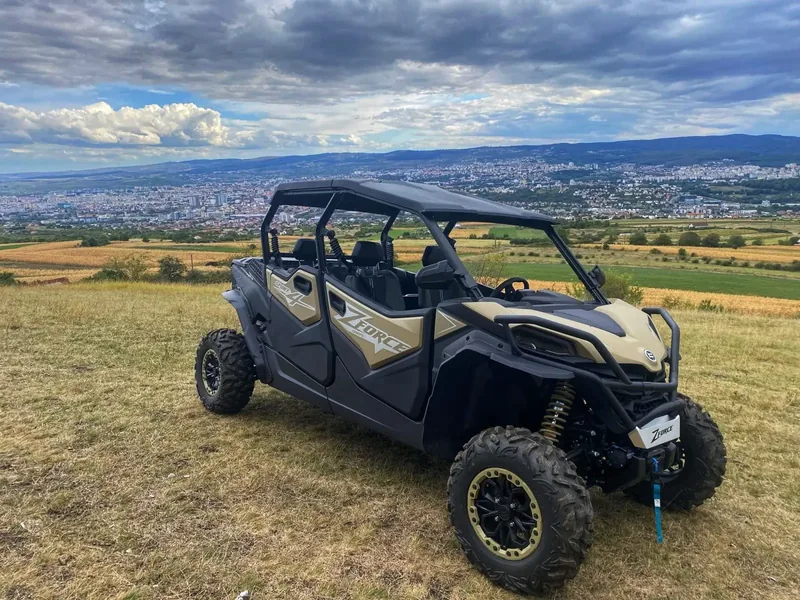
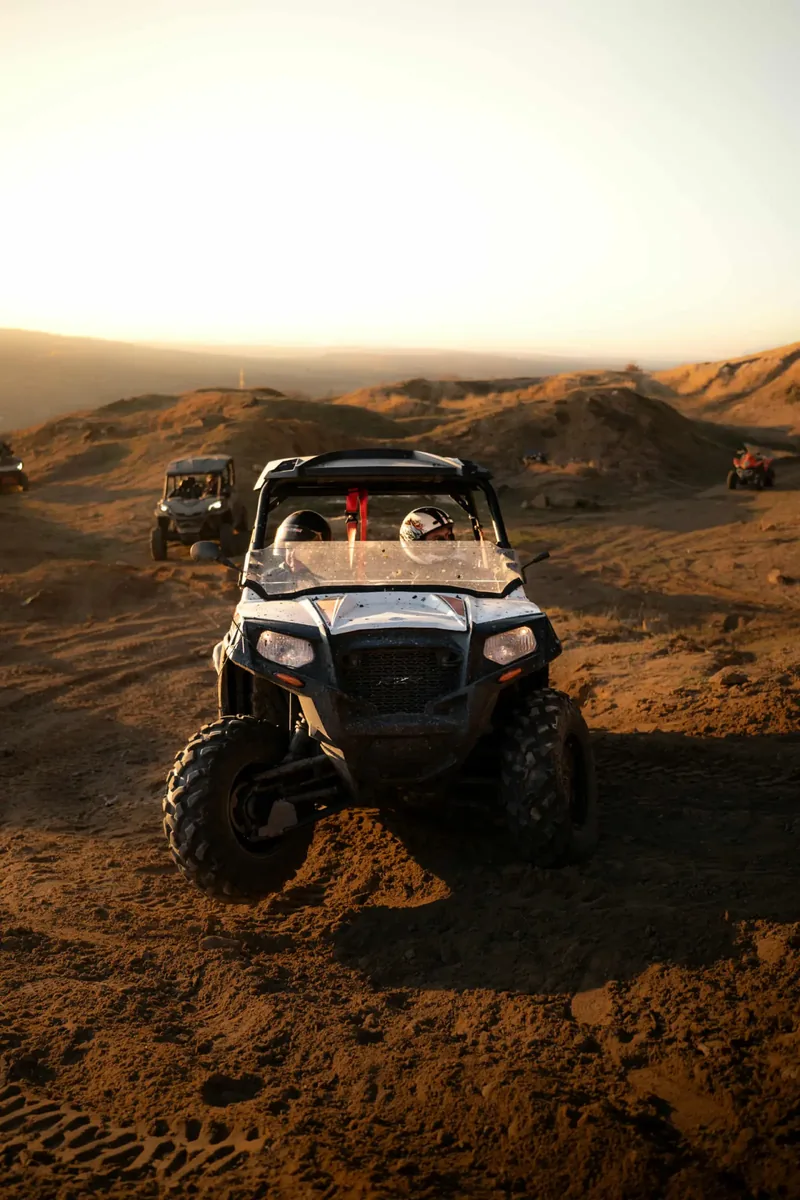
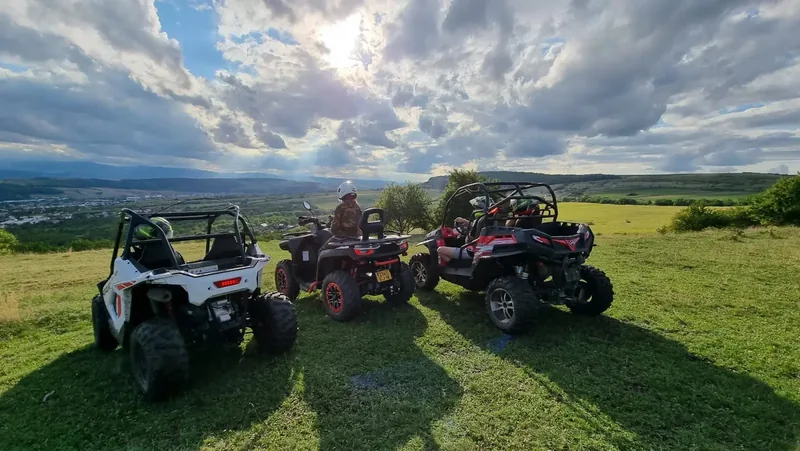
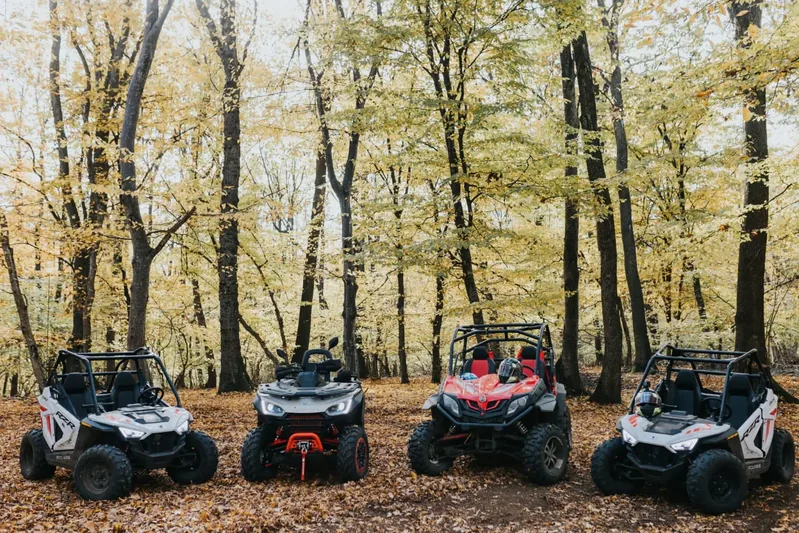
Cluj-Napoca is the perfect base for exploring Transylvania. All major attractions are within 2-4 hours by car or organized tour. And while you're based in Cluj, don't miss the experience that most tourists overlook: the off-road trails in the hills above the city, accessible via BuggyZone's guided tours. The views of the Transylvanian countryside from the hilltops above Dâmbul Rotund are among the most spectacular in the region — and you can be there in 15 minutes from the city center.
Transylvanian Food & Drink
Must-try dishes: sarmale (stuffed cabbage rolls with minced meat and rice), mici (grilled minced meat rolls eaten with mustard and bread), ciorba (sour soup, a Romanian staple), papanași (fried doughnuts with sour cream and jam). Wine: Transylvania produces excellent white wines, particularly around Jidvei and Tarnave regions. Palinca: the local plum brandy — strong, fragrant, and very Romanian.
When to Visit
May-September: best weather for outdoor activities and touring. Festivals in summer. October: spectacular autumn foliage, fewer tourists. December: Christmas markets in Brașov and Sibiu, magical atmosphere.
Practical Information
Currency: Romanian Leu (RON). 1 EUR ≈ 5 RON. Language: Romanian; English widely spoken in cities, less so in rural areas. Transport: renting a car is highly recommended for exploring the region. Uber and Bolt work well in cities. Accommodation: Cluj-Napoca has a wide range from budget hostels to boutique hotels.
Ready for the experience?
Spots fill up quickly during the season. Reserve yours now.
Book Cluj Adventure